

Emotions
Social-Emotional Learning
Just as children learn about sounds, the alphabet, writing, and conversations, they can learn about their feelings. This is called social-emotional learning (SEL), which helps kids stay calm, pay attention, get along with others, and be ready to learn.
SEL begins at home when parents talk to their children about feelings. When children can identify how they feel, they have an easier time controlling their behavior. You can help your child learn SEL skills with the activities in this section.
- By ages 3 to 4 children can identify feelings such as happy, sad, scared, and mad.
- By age 4 children begin to identify how other people feel and show empathy when others are upset.
- With the help of adults, preschoolers begin to develop skills to manage their behavior and control strong feelings.
Naming Feelings
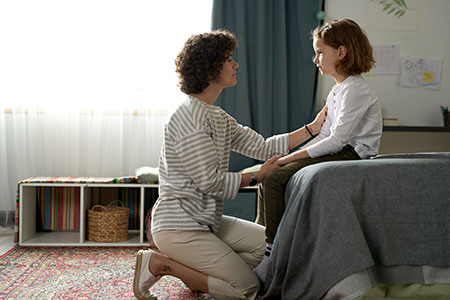
Ask your child how they feel
If they are not ready to describe a feeling, you can say how you think they feel. Ask questions to see if your child agrees: “I’m wondering if you’re feeling sad?” Or “Are you feeling scared right now?”
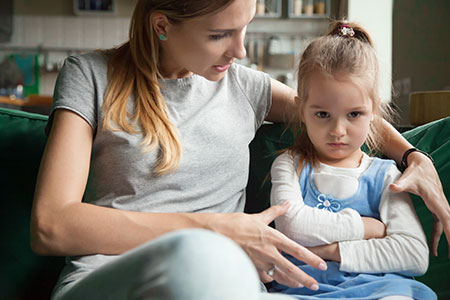
Show your child that you understand
Listen and accept how your child feels without judgment: “I wonder if you feel sad because you can’t go to the park today. Is that right? I understand, you really wanted to go.”
All feelings are OK, but bad behavior is not OK: “When your little sister takes your toys, I understand that it makes you mad, but hitting her is never OK. Let’s think about what you can do instead if she takes your things again.” Use this as a starting point to help your child learn how to problem-solve to prevent conflict or manage it better.
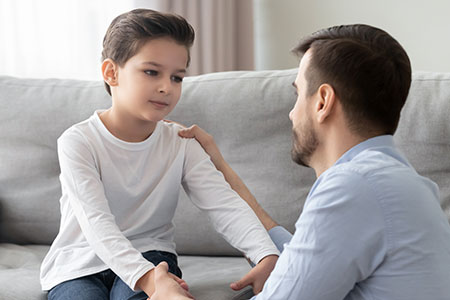
Be a role model
It’s important for parents to recognize and name their own feelings: “I’m beginning to get frustrated because you are not listening to what I’m saying.”
Be aware of how you express your feelings. Show self-control by not yelling or threatening your child when they do not listen. Your child is learning from your reactions. If they hear an angry voice or hurtful words they will think that’s an acceptable response.
Help Your Child Manage BIG Feelings
Self-regulation is the ability to manage emotions, thoughts, and behavior to stay calm, get along with others, and do well in school and in life. Help your child practice these skills until they are able to control big feelings and bad behavior on their own.
Promote self-regulation
Use these activities to help your child manage strong feelings:
- Talk about feelings: “Why are you angry at your friend? What happened that made you so mad?”
- Practice ways to calm down such as taking deep breaths, slowly counting to 10, or doing something physical like jumping jacks, stretching, or shaking their body.
- Find outlets for high energy, for example, playing outdoors (races, catch, hopscotch), turning up the music and having a dance party, going for a brisk walk together, or doing wall push-ups.
- Use quiet activities to take a break until your child is ready to rejoin the family. Examples include drawing or coloring, playing alone with a favorite toy, looking at books, or listening to music.
Books Help Build SEL Skills
Books are a great way to help your child name their feelings, notice and relate to others, and manage BIG feelings when upset.
Draw on your child’s experiences
Look for books that are about emotions. Use the pictures on the page or the story itself to begin talking about your child’s thoughts and experiences with different feelings: “Do you remember a time when you felt sad?” “When was the last time you felt angry?” “What happened at school today that made you happy?”
Share your feelings
Pointing out your feelings helps your child see that everyone has the same emotions. “The day you were born was the happiest day of my life.” Or “The day I started my new job I was really worried because I didn’t know anyone there.”
Use clues to identify feelings
For books about many emotions, when you turn the page to a new picture, ask your child to name the feeling, and talk about how they guessed the right answer. This helps them pay attention to body language and facial expressions.
Next, have some fun! Both of you make a face that expresses the same emotion. If you have a smartphone, take pictures of the faces you make to share with your child. Use the pictures to make a feelings book or feelings poster that your child can use to identify their feelings each day.

Pro Tip
SEL skills can be practiced anytime and anywhere. It does not require anything more than drawing attention to and talking about the many feelings your child experiences or sees daily. SEL can take place with family or friends, in real life or on a screen, in books or songs!
Reading
- The Feelings Book, by Todd Parr
- Lots of Feelings, by Shelly Rotner
- My Body Sends a Signal: Helping Kids Recognize Emotions and Express Feelings, by Natalia Maguire
- The Boy with Big Big Feelings, by Lee Winn
Online Videos
- The Feelings Song, by Miss Molly
- Inside Out: Guessing the Feelings, by Laia Garcia